Table of Contents
Published on
Last modified on

5 minutes
Dinan, a medieval town with 3 km of ramparts
Perched high above the Rance Valley, Dinan is one of Brittany’s best-preserved medieval towns. Its 3 km of ramparts, its castle, Rue du Jerzual, and its 130 half-timbered houses transport visitors back ten centuries. From our campground in the Côtes d’Armor, this city of art and history is perfect for a lovely day trip. Here are the must-see sights that will help you understand why Dinan is such a favorite among heritage enthusiasts!
Summary of the Article
- A remarkably well-preserved medieval town: Dinan is one of the most beautiful historic towns in Brittany. Surrounded by nearly 3 km of ramparts, it charms visitors with its half-timbered houses, cobblestone streets, and imposing castle overlooking the Rance Valley.
- A rich cultural heritage waiting to be discovered: The city boasts many iconic landmarks, such as the Clock Tower, the castle, the ramparts, and several museums, which trace more than a thousand years of history and have earned it the designation “City of Art and History.”
- The Port of Dinan and the Rance Valley: Walking down the famous Rue du Jerzual, visitors reach the marina, an ideal starting point for walks, bike rides, or boat trips along the Rance River in a peaceful natural setting.
- A must-see destination in Brittany: With its rich heritage, fine dining, shops, markets, and cultural events, Dinan offers an authentic experience that makes it a must-visit stop during a trip to the Côtes-d’Armor.
- Dinan Castle, built in the late 14th century, features a keep-palace over 30 meters tall. The medieval ramparts stretch for 3 km, punctuated by 10 towers and 4 gates. Rue du Jerzual has connected the port to the upper town for 10 centuries, winding its way between half-timbered houses and art studios. The Clock Tower offers a 360-degree panoramic view from 43 meters above the city. The Basilica of Saint-Sauveur has combined Romanesque and Gothic styles since the 12th century.
Dinan Castle and its keep-palace
Dinan Castle overlooks the town from the top of its keep-palace, built in the late 14th century by Duke John IV of Brittany. This princely residence, which rises to a height of more than 30 meters, was among the most modern of its time. Today, visitors can explore it through a rich and engaging museum exhibition.
Read more
The exhibition explores the art of war in the Middle Ages and daily life in large stately homes. Children especially enjoy the rooms dedicated to weapons and armor. The climb to the top of the keep is well worth the effort, offering a sweeping view of the slate-roofed houses and the surrounding countryside.
The medieval ramparts, the longest in Brittany
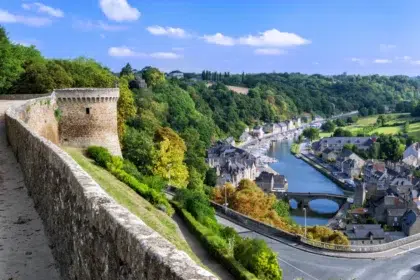
With nearly 3 km of walls, Dinan’s ramparts form one of the best-preserved fortified complexes in France. Punctuated by 10 towers and 4 historic gates, they still encircle the old town and can be explored on foot. The walk offers superb views of the Rance Valley and the city’s rooftops.
Read more
Built to protect the medieval town, these fortifications bear witness to Dinan’s past prosperity. A complete tour takes you past the Coëtquen, Beaumanoir, and Connétable towers. It’s one of the most beautiful heritage walks in the Côte d’Armor, free and accessible to everyone.
Jerzual Street and the Port of La Rance
For 10 centuries, Rue du Jerzual has connected the upper town to the port below. This steep, cobblestone street, lined with half-timbered houses and artists’ studios, has an impressive gradient of 12 to 18 percent over a distance of 502 meters. Glassblowers, painters, and artisans carry on a centuries-old tradition here.
Read more
As you walk all the way to the end, you’ll reach Dinan’s old port, nestled on the banks of the Rance. The old merchants’ houses, terraces, and peaceful quays invite you to take a break. River cruises to Dinard and Saint-Malo also depart from here, allowing you to continue your exploration along the water.
The Clock Tower and the Historic District
The Clock Tower has watched over the historic center since the late 15th century. This 43-meter-tall belfry, which houses a monumental clock dating from 1498, symbolizes the emancipation of Dinan’s bourgeoisie. Climbing its floors offers a 360-degree panoramic view of the entire city and the valley.
Read more
At the foot of the tower lies a charming maze of cobblestone streets. The Basilica of Saint-Sauveur, whose foundation stones date back to the 12th century, blends Romanesque and Gothic styles. All around, lively squares and medieval houses create a unique setting. As the team at Village Perrosien often reminds us: “ Dinan is best enjoyed on foot, without a watch, simply by looking up.”
What if your next vacation combined the beaches of Brittany with trips inland?
Dinan offers the perfect medieval getaway to add some variety to your vacation in Brittany. Book your cabin at the Village Perrosien and plan your day in Dinan between swims along the Pink Granite Coast!
FAQ – Dinan
What to See in Dinan in One Day?
For a one-day visit to Dinan, start with the castle and its keep-palace, walk along the ramparts, then head down Rue du Jerzual to the Port de la Rance. Finish with the Clock Tower and the Basilica of Saint-Sauveur. This itinerary covers the main landmarks of the medieval city at a leisurely pace.
How long does it take to visit Dinan?
To visit Dinan, plan on spending a full day so you can fully enjoy the sights and the historic center. Half a day is enough for a first look at the ramparts and Rue du Jerzual. Those who love history and walks along the Rance River will happily spend two days there.
Is there an admission fee to visit Dinan Castle?
Yes, there is an admission fee to visit Dinan Castle, as it includes access to the keep-palace and its museum exhibition. Reduced rates are available for children and families, and admission is free for young children. Hours vary by season, with longer hours in the summer.
How do you get to Dinan from the Pink Granite Coast?
To get to Dinan from the Pink Granite Coast, driving is still the easiest way, via the expressway that runs through the Côtes-d’Armor department. Dinan also has a train station connected to the regional Breton rail network. Once there, the historic center can be explored entirely on foot.