Table of Contents
Published on
Last modified on

5 minutes
The Emerald Coast: Another Side of the Breton Coastline
In eastern Brittany, the Emerald Coast stretches 120 km along the coastline between Pointe du Grouin, in Cancale, and Cap Fréhel. With its pirate town, Belle Époque villas, and windswept headlands, it offers a different experience from the Pink Granite Coast. From our campground in the Côtes d’Armor, this destination is perfect for a lovely day trip.
Here are the must-see sites to fully appreciate the charm of this coastline with its emerald-colored waters.
Summary of the Article
- Discover a unique natural site in Brittany: the Sillon de Talbert is an impressive 3.2-kilometer-long strip of sand and pebbles that juts out into the sea, offering spectacular scenery and exceptional biodiversity.
- Plan your visit around the tides: because of a gap in the seawall, access to the end of the channel depends on the tide schedule. It is essential to check the tide schedule before your walk.
- Enjoy a walk through a nature reserve: observe protected flora and fauna while following the site’s rules (do not pick up pebbles, stay on the trails, and respect nesting areas).
- Round out your visit with a stop at the Maison du Sillon or a guided tour to gain a better understanding of the history, geology, and natural treasures of this iconic site in the Côtes-d’Armor.
- The Emerald Coast stretches 120 km, from Pointe du Grouin to Cap Fréhel. Its name was coined in 1890 by the historian Eugène Herpin, in reference to the color of the sea. Saint-Malo, the pirate city, is the most famous destination. Dinard charms visitors with its Belle Époque villas and its chic seaside atmosphere. From Cancale to the Rance Valley, panoramic views and resorts follow one after another.
What is the Emerald Coast?
The Emerald Coast refers to the stretch of coastline along the English Channel located in eastern Brittany, on the border with Normandy. It stretches 120 km between Cancale and Cap Fréhel, spanning the departments of Côtes-d’Armor and Ille-et-Vilaine. The Rance Estuary, Dinard, and Saint-Malo form its historic and tourist heart.
Read more
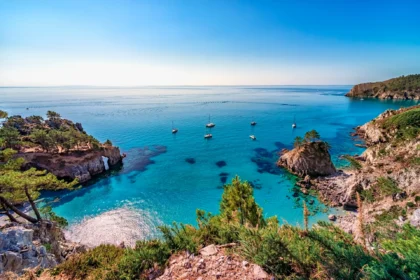
This poetic name dates back to 1890, when lawyer and historian Eugène Herpin coined it to describe the emerald-green hues of the sea. Since then, the name has stuck and perfectly captures the ever-changing beauty of these landscapes. People come here as much for its historic towns as for its rugged headlands and long beaches.
Saint-Malo, the Pirate City
Saint-Malo is the premier destination on the Emerald Coast. Its old town, known as the “Intra-Muros,” stands behind imposing ramparts built between the 12th and 18th centuries. A stroll along these ramparts, which stretch nearly 2 km, offers magnificent panoramic views of the bay and the open sea.
Read more
Nearly 80% of the town was destroyed during the bombings of World War II, but it was rebuilt exactly as it was, stone by stone. Today, visitors can stroll through its cobblestone streets, walk to the Fort National at low tide, and witness some of the highest tides in Europe. Offshore, the island of Cézembre completes this maritime landscape steeped in a history of privateering.
Dinard and Its Belle Époque Charm
Located across from Saint-Malo, on the other side of the Rance Estuary, Dinard exudes a unique elegance. This seaside resort owes its fame to British aristocrats, who began building sumptuous villas there as early as the 19th century. Today, the town boasts more than 400 listed Belle Époque villas—a rare heritage in Brittany.
Read more
The famous Promenade du Clair de Lune runs along the sea and reveals these residences with their elegant facades. The fine sandy beaches, striped beach huts, and sea bathing evoke the golden age of seaside resorts.
From Cancale to Cap Fréhel: Nature and Panoramic Views
The Emerald Coast isn’t limited to its two major cities. To the east, Cancale delights food lovers with its oysters, while the Pointe du Grouin overlooks the bay of Mont-Saint-Michel. This town also offersone of the most beautiful views along the entire coast.
On the west coast, several towns in the Côtes-d’Armor are worth a visit, such as Saint-Cast-le-Guildo, Saint-Jacut-de-la-Mer, and Lancieux. Here are a few things to do along this coastline:
- Travel up the Rance Valley on foot, by bike, or by boat to Dinan.
- Hike along the GR34 trail to the cliffs of Cap Fréhel and Fort la Latte.
- Try some Cancale oysters while looking out over the Bay of Mont-Saint-Michel.
Good to know: To get from one side of the Rance River to the other, leave your car behind and take the ferry between Dinard and Saint-Malo. Our vacationers love this short crossing, which offers the best view of the walls of the pirate city. Be sure to check the schedule—which is based on the tides—before planning your day!
What if your next trip to Brittany combined pink granite and emerald waters?
From one coastline to the other, Brittany reveals facets that are as varied as they are complementary. Book your cabin at Village Perrosien and set out for a day trip to explore the Emerald Coast!
FAQ – Emerald Coast
Why is it called the Emerald Coast?
It is called the Emerald Coast because of the emerald green color of its waters. The historian and lawyer Eugène Herpin coined this name in 1890, captivated by the hues of the sea and the shoreline. The name has stuck and today characterizes the entire Breton coastline.
What to See on the Emerald Coast?
On the Emerald Coast, don’t miss Saint-Malo and its ramparts, Dinard and its Belle Époque villas, Cancale and its oysters, as well as Cap Fréhel. The Rance Valley, the Pointe du Grouin, and the seaside resorts of Saint-Cast-le-Guildo and Saint-Jacut-de-la-Mer round out the experience.
How can I visit the Emerald Coast?
To explore the Emerald Coast, the Sentier des Douaniers (GR34) trail is the perfect way to walk along the coastline. You can also explore the Rance Valley and travel from Dinard to Saint-Malo by bike or boat. Plan on spending several days to cover the entire coastline.